
[From IoM Examiner Annual 1938]
VICE-ADMIRAL THE HON. WILLIAM SPENCER LEVESON GOWER, C.B., D.S.O., R.N.
is brother and heir presumptive of the Third Earl of ville and brother-in-law of Her Majesty Queen Elizabeth, appointed Lieut.-Govenor of the Isle of Man last July, and took over the reins of office on the lst October. He served with the Fleet as Captain during the Great War, and was mentioned in dispatches, and awarded the Distinguished Service Order for his work with the Grand Fleet destroyers in 1918. He also gaineded distinction in the daring naval attack on Zeebrugee on St. George's Day in 1918. He has seen much service afloat since the war, and commanded the cruiser H.M.S. Cornwall on the China Station during 1927-29. In 1929; he became Naval D.D.C to late King George V., and in the same year he waspromo ted to Rear Admiral. He was Commanding Officer of the coast of Scotland from 1931 to 1933, and two years ago he was appointed Vice-Admiral and and went on the retired list.
During his brief term of Governorship so far, His Excellency has greatly impressed the Island community by his eagerness to get to close grips with the principal esocial problems of his "kingdom" and has revealed promise of developing into a social administrator and close friend of the Manx people.
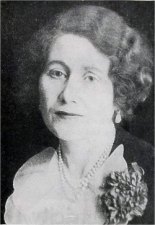
LADY ROSE LEVESON GOWER,
wife of His Excellency the Lieut.-Governor, is the daughter of the 14th Earl of Strathmore and a sister of Queen Elizabeth She was married to His Excellency in 1916 and they have one son and one daughter. She has already evinced a deep interest in the Island and the Manx people, and has identified herself with a variety of social movements. The moment she stepped on to Manx soil— for the first time in her life— last October she commenced to capture the hearts of her "subjects" by her natural grace and charm. That initial conquest has since been extended and when she made her first speech on the Island she delighted a large audience at Villa Marina by the pleasing clarity of her voice, her fluency of speech, and happy touches of eloquence. Within a few weeks, while visiting many parts of the Island to fulfil public engagements of a social character, she has gained the love of the inhabitants, and a happy "reign" assuredly lies ahead of her in the Isle of Man.
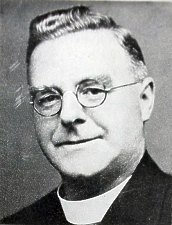
THE VERY REV. DEAN THOMAS TURNER,
who was appointed by Archbishop Downey a year ago as successor to the late Canon Crookall to be parish priest of St. Mary's, Douglas, has already displayed qualities which stamp him as a worthy spiritual leader of those who embrace the Catholic Faith in this Island. His early priesthood was spent in Liverpool at the Church of Our Lady, in Eldon Street, at the Pro-Cathedral and later at St.. Joseph's, Grosvenor Street. For nine years, he was Rector of St. Patrick's, Widnes, where he celebrated the Silver Jubilee of his priesthood in the summer of 1936, and was the recipient of a motor-car from his parishioners and friends. An enthusiastic educationist and earnest social worker, Father Turner was a member of the Widnes Education Committee and the Juvenile Advisory Board. Shortly after taking up his appointment at Douglas, he was made Rural Dean of the Isle of Man — a post which involves responsibility for administration of all the Catholic churches in the Island. Apart from his training and experience as a priest, Father Turner has personal gifts which are destined to win him a high place in «he affections of the Manx people. He has great courtesy, geniality, abundant energy and industry, and is an earnest and convincing preacher.

MR. HAROLD GAMES WYNN HUGHES-GAMES, J.P.,
who was appointed to the Bench of Justice last April, is the only surviving son of the late Ven. Archdeacon Joshua Hughes-Games, who was for 20 years Principal of King William's College. Educated at King William's and at Worcester College, Oxford, he was assistant master at K.W.C. for about ten years: and later became senior master at the Royal Naval College of Osborne and Dartmouth, where he served for nearly 20 years. On his retirement to the Isle of Man in 1933, he promptly applied all his time and labour to raising funds for the restoration of King William's College buildings. He specially identified himself with the Barrovian Hall Fund and headed the list of subscribers with personal subscriptions totalling £3,000. By his individual efforts he raised over £9,000. He was appointed a Trustee and Governor of the College shortly after his return to the Island.
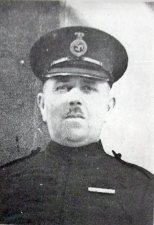
CHIEF INSPECTOR WILLIAM GALE,
who was appointed to be Chief Inspector and Deputy Chief Constable of the I.O.M. Constabulary last September, has 30 years' police service to his credit. He joined the Force in 1907, and was promoted Acting-Sergeant in September, 1924. Five years later he attained the rank of Sergeant, and had charge of the Peel Division. For some years prior to his transfer to Ramsey, where he became Inspector in April, 1936, he was in the Police Record Office at Douglas, and also acted as Inspector under the Dangerous Goods Act, the Weights and Measures Act and the Children's Act. He is admirably equipped in every way for the second highest post in the Manx Police service. His all-round knowledge of police work has been acquired by experience in detective work, training as an expert in tters relating to the aforementioned Acts, and in the practical and administrative sides of a police officer's duties. By character, too, he is well qualified for his high responsibility, his geniality, courtesy and kindly patience enabling him to handle the delicate tasks associated with the control of the police with prudence, tact and good sense.
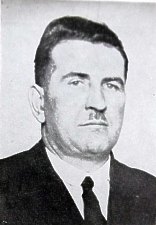
POLICE INSPECTOR WILLIAM KNEEN,
who was placed in charge of the Ramsey Division of the I.O.M. Constabulary in September last, joined the Force in May, 1913. He joined the Army very shortly after the outbreak of war, and when he was demobilised he resumed police duty in the role of plain clothes detective Officer. For many years he was the one officer of the Force who never wore a uniform, and in July, 1934, he was promoted to Acting-Sergeant, and two years later he attained the rank of Sergeant. In October, 1936, he returned to uniform to become station sergeant at Douglas, and he held that position up to the date of his promotion to Inspector. It is generally conceded that Inspector Kneen, who is still a comparatively young man, is one of the smartest officers ever attached to the Manx Force. His detective work earned him many praises from the Bench, his skilful investigation has unravelled numerous puzzling problems in the realm of Insular crime. Though it fell to his lot to arrest many offenders, he was always scrupulously fair in the witness box, and: if it was at all possible to put in a good word for the culprit he never failed to utter it.
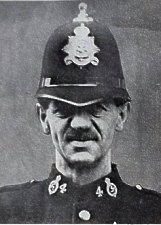
POLICE SERGT. JOHN THOMAS KNEALE,
has been appointed Inspector for the Castletown Division of the Isle of Man Constabulary — an appointment which takes effect from the lst January, 1938. A native of Andreas, the Inspector joined the Police Force in May, 1911, and served four years in Ramsey and Douglas. In June 1915, he joined the Army and served throughout the war. On demobilisation, he rejoined the Force in August, 1919, and was appointed to Crosby. He later served several years in Douglas, and in April, 1934. became Acting-Sergeant at St. John's. Last February, he was appointed Sergeant and was placed in charge of the Peel Division. His quiet efficiency and pleasing personality have won him the general respect of the community in the west of the Island, and there is little doubt that he will quickly earn the confidence of people of all grades and opinions in the south.

MR. R. L. CARTER,
who was appointed general manager of Isle of Man Air Services last September, is a pioneer of civil aviation, and is the ideal man for the post he now occupies. His experience includes that of active pilot, technician, publicity and administrator in the realm of flying, and this experience is fortified by a keen business sense. He flew as a pilot in the Royal Flying Corps during the war, and in the early post-war years he was identified with the development of civil aviation and held an important post on the publicity side for Imperial Airways. His technical knowledge of aircraft was proved when a machine of which he was part designer won the Schneider Trophy for Britain. A few years ago, Mr Carter linked up with that other great figure in British aviation, Capt. G. P. Olley, and he became a director.of Olley Air Services. He has been associated with commercial flying to and from the Isle of Man since the inception of the first regular service, and with the fusion of the interests of the Manx Airways (the I.O.M. Steam Packet Co. and the L.M.S. Railway) and the Blackpool and West Coast Air Services (the Olley concern) last September, Mr Carter was the obvious choice for the post of general manager.

MR. T. LESLIE EVANS,
known throughout the Island as a leading light in the realm of sport, has just won his spurs in the political field. At the second attempt, he this year secured a seat on the Ramsey Town Commissioners. He only began taking an interest in political matters a year or two ago when he became associated with the formation of a ratepayers' body and his success on that account is all the more remarkable. He is secretary of the Ramseian Swimming Club and the official handicapper, secretary of the Ramsey Branch of the British Legion, an official of the Ramsey Church Institute, and his sporting record is such that he played goalkeeper in a final for Ramsey at the age of 15 years — being given permission to take a holiday from school for the occasion — he is also a keen swimmer, cricketer, and billiards player and numbers golf and tennis also among his outdoor pursuits. If his political career equals his sporting activities he is destined to go far. Most people know that he played professional for Stockport County when quite young and his playing career was interrupted by the Great War In which he saw active service. On his return to the Island he captained Ramsey and Braddan clubs at different periods, and for his home club he played with almost equal prowess in the goalkeeping and outside-right positions.
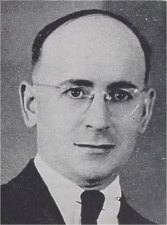
MR. RICHARD H. CORKILL.
who was elected President of the North American Manx Association at the tenth annual Convention held in Rochester, New York, last August. The new President is a son of Mrs Corkill and the late Mr Thomas Corkill, of Ballergy House, Lower Foxdale, where he was born. He left the Island for America in January, 1929, and before he had been twelve months in his adopted country he was actively identified with the Manx movement and in November, 1930, he founded and organised the Detroit-Windsor Manx Society. For five years he served the Society as secretary, and to-day occupies the office of President. In 1934, during the N.A.M.A. Convention in Chicago, he organised the N.A.M.A. Breakfast Club and was its President for two years; in 1936 he was made an honorary Life President. While living in the Island, Mr Corkill was a keen cyclist and runner and won the A. B. Crookall Challenge Cup forrunning. He is a reliable custodian of the heritage handed on to him by Alderman Willie Moore, and he can be trusted to advance the work of the N.A.M.A. during his year of Office. He is in the shipping department of the Parker Wolverine Enamelling Corporation, and resides at 14394 Marlowe Avenue, Detroit, Michigan.
|
|
||
|
|
||
|
|
||
|
Any comments, errors or omissions gratefully received
The Editor |
||


